The latest news!

How to choose an ATS in 2026?

Discover our guide dedicated to helping you choose a new recruitment software!

With Excel you don’t need an ATS. Really?

You don’t need an ATS… ...until the moment Excel shows its limits. At first, the spreadsheet is an obvious ally: a few rows, three columns, and your application tracking is set up. It’s fast, free, and flexible. Exactly what you expect from it. But in recruitment, one reality is gradually asserting itself: a simple setup works very well as long as the volume of applications remains manageable . Then your needs evolve. More applications, several positions to recruit for at the same time, and sooner or later colleagues joining your team. Tracking becomes a bit less smooth, information gets scattered across different tools, and some tasks take longer than they used to. Nothing critical, but a clear signal: the tool is reaching its limits. From that point on, the question is no longer really whether Excel works. It’s whether it’s still suited to your needs. The “too many spreadsheets” syndrome: a misleading illusion of robustness Excel is inevitably only a temporary solution for managing your recruitment. Microsoft Excel was originally designed to handle numerical data and organize information in table form. Its main role is: do calculations (budgets, forecasts, financial analyses) organize data (lists, inventories, simple databases) quickly analyze (sorting, filters, pivot tables) model scenarios (simulations, projections) In other words, Excel is a tool for processing and analyzing data, not an ideal tool for managing a workflow or complex processes. Excel does its job perfectly if: Your number of applications remains negligible (1 or 2 positions per year). Each job posting receives fewer than 20 applications. You are the only one in charge of updating the file. The breaking point comes as soon as you start to scale. Multiply the open positions and add a manager into the loop, and chaos isn’t far off! The limits of Excel in recruitment The problem with Excel doesn’t come from what it does, but from what it doesn’t let you do. Behind its simplicity, certain limitations appear as soon as the volume increases: Limited visibility: It’s hard to have a clear, real-time view of recruitment progress. Tracking does exist, but it takes time and remains hard to read. Clarity is quickly lost. A not-so-smooth collaboration: Between the different file versions, the conversations on Slack, and the emails, information is scattered. This makes teamwork more complicated and increases the risk of errors. Limited use of applications: Profiles are stored but rarely reused effectively. Without structure or long-term tracking, a strong candidate can quickly be forgotten. Time-consuming manual tasks: Sorting resumes, following up, updating records… these actions take time and rely entirely on people, with a risk of things being forgotten. An impact on the candidate experience: In poorly structured processes, a significant number of candidates do not receive any response. This can damage the company’s image. Taken individually, these points may seem minor. But taken together, they slow down recruitment and reduce its quality. In an unstructured process, up to 60% of candidates never receive a response. It’s your employer brand that pays the highest price. The hidden cost of “free” Saying that Excel costs nothing is an accounting error. In reality, you pay for your recruitment process in “brainpower” or in “headaches” — it’s up to you! An invisible administrative burden - In SMEs, a recruiter spends on average 30 to 40% of their time on low value-added tasks: copying and pasting information, following up manually, renaming and filing resumes. Time that is necessary, but that comes at the expense of analysis and candidate relationships. A recurring sourcing cost - Because there’s no structured database (talent pool), every recruitment process starts from scratch. Posting job ads on LinkedIn often costs between €300 and €1,500 per listing , for candidates you may already have identified in the past. The wake-up call: when should you switch to an ATS? Switching to an ATS shouldn’t be a rushed, last-minute reaction, but a natural next step in the evolution of your organization. There are some unmistakable signs: You spend more time updating your spreadsheet than talking to candidates. A manager asks you, “what’s the status of my recruitment?” and you have to go look for the information. A good candidate slips away from you simply because of a lack of follow-up. You no longer know exactly how many candidates are currently in the recruitment process. You recruit regularly, but without any real method or structured follow-up. Taken individually, these signals may seem harmless. But taken together, they point to one simple thing: your organization is reaching its limits. At this point, the question is no longer whether you should structure your hiring, but when you decide to do it. Switching to an ATS: structuring the recruitment process An ATS like Jobloom lets you move from manual tracking to a structured, traceable, and manageable process . Data centralization - All applications, communications, and documents are consolidated in a single database. Each candidate has a complete history, accessible in real time by the teams. Pipeline tracking - Applications are organized by stages (screening, interview, approval, etc.). The pipeline provides a clear view of progress and makes it easier to manage recruitment. Automation of actions - Sending emails, follow-ups, and acknowledgements of receipt: repetitive tasks are automated. This reduces oversights and ensures consistent communication. Connection with the career site - The job postings published on your career site are synchronized in real time with the ATS . Any changes are automatically updated, applications flow directly into the system with no re-entry or breaks in the process. This ensures reliable information and a smooth candidate experience. Talent pool utilization - Profiles are indexed, searchable, and can be reactivated. The candidate database becomes an internal sourcing lever , available at any time. Structured collaboration - Managers and recruiters work in the same tool, with shared comments, evaluations, and tracking. Information is consolidated and no longer depends on scattered exchanges. An ATS helps secure the process, improve visibility, and optimize the time spent on recruitment. Conclusion: Excel is a starting point, not a future-proof solution Excel works until it starts slowing down your hiring. At first, it provides structure. Then, gradually, it scatters, wastes time, and lets opportunities slip by. This shift is rarely visible, but its effects are very real. The issue isn’t choosing between two tools. It’s deciding when you want to move from a handcrafted, ad‑hoc process to a controlled, well‑managed recruitment approach. “I have Excel, I don’t need an ATS.” Really? Here’s how it changes your day-to-day work. Excel Candidates scattered across 10 files Manual posting, offer by offer No automatic tracking of applications Copy-paste, duplicates, errors No careers site Team collaboration impossible GDPR: data everywhere, real risk Jobloom All candidates centralized, in one single place Multi-posting to LinkedIn, Indeed & co in 1 click Visual pipeline, 100% automatic tracking AI-powered sorting and matching Career site created for you The whole team collaborates in real time GDPR by design, data secured “Excel manages rows. Jobloom manages your recruitment.” Amélie Ready to attract the right candidates? Simplify your hiring with Jobloom.

Why should you treat your candidates like your customers?

In a tight labor market, attracting and engaging top talent has become just as strategic as winning over your customers. Yet far too many companies still treat recruitment as an administrative, secondary function with little power to differentiate. What if we changed this perspective? What if your future candidates were actually your most valuable customers—the ones who shape your growth, your culture, and your ability to innovate? Recruitment is no longer just an HR process; it has now become a digital experience. 55% of candidates turn down an offer because of a poor process. 50% say they are disappointed with their candidate experience. Most candidates expect a smooth, transparent, and engaging experience. They compare your hiring process to the experience they have with brands, whether they’re buying a product or subscribing to a service. To attract these profiles, it’s no longer enough to post a job ad and wait. You need to tell a story, create an experience, and turn interest into action—just like a successful marketing strategy does. Your candidates are customers, with specific expectations. Just like your external clients, your future collaborators: want to be won over from the very first interaction expect clear and mobile-friendly navigation want a seamless experience from start to finish waiting for transparency about the process And above all, they’re ready to say yes—or no—with just a few clicks. Jobloom: recruitment designed as a customer experience Our solution has been designed to make recruitment a qualitative, engaging, and high‑performing experience. A careers site that reflects who you are Jobloom creates a personalized, mobile‑first careers site for you, optimized to convert. It’s not just a job listings page: it’s an immersive experience that tells your story—your culture, your values, your vision—and makes people want to apply. Maximum visibility With automatic multi-posting to more than 100 platforms, your job ads appear where your future talents spend their time: Google Jobs, LinkedIn Recruiter, Indeed, VDAB, Forem, … A smooth candidate journey Jobloom offers an intuitive one-click candidate journey, designed to reduce drop-offs and increase conversion rates. A conversion generally 20 to 30 times higher than traditional recruitment websites. An AI-powered ATS management tool to automate and save time: with the integrated ATS, you centralize all your applications, automate repetitive tasks, track profile status in real time, and optimize your interactions with automation tools. Recruitment = marketing + data + experience What sets Jobloom apart isn’t just the technology. It’s the philosophy: Treat every candidate as a potential customer of your employer brand Create a journey that convinces him, step by step Measure, optimize, and accelerate your results This approach turns hesitant visitors into motivated applicants. And well-treated applicants into ambassadors, even if they don’t end up joining your team. The real advantage for SMEs With Jobloom: Your offers gain visibility You save time You attract the right profiles You are building a real employer brand The best talent today isn’t just recruitable, they’re selective. If you don’t offer them an experience on par with a customer journey, they won’t apply. Your candidates are more than just résumés. They’re customers you need to win over. And Jobloom is here to help you convince them.


With Excel you don’t need an ATS. Really?

You don’t need an ATS… ...until the moment Excel shows its limits. At first, the spreadsheet is an obvious ally: a few rows, three columns, and your application tracking is set up. It’s fast, free, and flexible. Exactly what you expect from it. But in recruitment, one reality is gradually asserting itself: a simple setup works very well as long as the volume of applications remains manageable . Then your needs evolve. More applications, several positions to recruit for at the same time, and sooner or later colleagues joining your team. Tracking becomes a bit less smooth, information gets scattered across different tools, and some tasks take longer than they used to. Nothing critical, but a clear signal: the tool is reaching its limits. From that point on, the question is no longer really whether Excel works. It’s whether it’s still suited to your needs. The “too many spreadsheets” syndrome: a misleading illusion of robustness Excel is inevitably only a temporary solution for managing your recruitment. Microsoft Excel was originally designed to handle numerical data and organize information in table form. Its main role is: do calculations (budgets, forecasts, financial analyses) organize data (lists, inventories, simple databases) quickly analyze (sorting, filters, pivot tables) model scenarios (simulations, projections) In other words, Excel is a tool for processing and analyzing data, not an ideal tool for managing a workflow or complex processes. Excel does its job perfectly if: Your number of applications remains negligible (1 or 2 positions per year). Each job posting receives fewer than 20 applications. You are the only one in charge of updating the file. The breaking point comes as soon as you start to scale. Multiply the open positions and add a manager into the loop, and chaos isn’t far off! The limits of Excel in recruitment The problem with Excel doesn’t come from what it does, but from what it doesn’t let you do. Behind its simplicity, certain limitations appear as soon as the volume increases: Limited visibility: It’s hard to have a clear, real-time view of recruitment progress. Tracking does exist, but it takes time and remains hard to read. Clarity is quickly lost. A not-so-smooth collaboration: Between the different file versions, the conversations on Slack, and the emails, information is scattered. This makes teamwork more complicated and increases the risk of errors. Limited use of applications: Profiles are stored but rarely reused effectively. Without structure or long-term tracking, a strong candidate can quickly be forgotten. Time-consuming manual tasks: Sorting resumes, following up, updating records… these actions take time and rely entirely on people, with a risk of things being forgotten. An impact on the candidate experience: In poorly structured processes, a significant number of candidates do not receive any response. This can damage the company’s image. Taken individually, these points may seem minor. But taken together, they slow down recruitment and reduce its quality. In an unstructured process, up to 60% of candidates never receive a response. It’s your employer brand that pays the highest price. The hidden cost of “free” Saying that Excel costs nothing is an accounting error. In reality, you pay for your recruitment process in “brainpower” or in “headaches” — it’s up to you! An invisible administrative burden - In SMEs, a recruiter spends on average 30 to 40% of their time on low value-added tasks: copying and pasting information, following up manually, renaming and filing resumes. Time that is necessary, but that comes at the expense of analysis and candidate relationships. A recurring sourcing cost - Because there’s no structured database (talent pool), every recruitment process starts from scratch. Posting job ads on LinkedIn often costs between €300 and €1,500 per listing , for candidates you may already have identified in the past. The wake-up call: when should you switch to an ATS? Switching to an ATS shouldn’t be a rushed, last-minute reaction, but a natural next step in the evolution of your organization. There are some unmistakable signs: You spend more time updating your spreadsheet than talking to candidates. A manager asks you, “what’s the status of my recruitment?” and you have to go look for the information. A good candidate slips away from you simply because of a lack of follow-up. You no longer know exactly how many candidates are currently in the recruitment process. You recruit regularly, but without any real method or structured follow-up. Taken individually, these signals may seem harmless. But taken together, they point to one simple thing: your organization is reaching its limits. At this point, the question is no longer whether you should structure your hiring, but when you decide to do it. Switching to an ATS: structuring the recruitment process An ATS like Jobloom lets you move from manual tracking to a structured, traceable, and manageable process . Data centralization - All applications, communications, and documents are consolidated in a single database. Each candidate has a complete history, accessible in real time by the teams. Pipeline tracking - Applications are organized by stages (screening, interview, approval, etc.). The pipeline provides a clear view of progress and makes it easier to manage recruitment. Automation of actions - Sending emails, follow-ups, and acknowledgements of receipt: repetitive tasks are automated. This reduces oversights and ensures consistent communication. Connection with the career site - The job postings published on your career site are synchronized in real time with the ATS . Any changes are automatically updated, applications flow directly into the system with no re-entry or breaks in the process. This ensures reliable information and a smooth candidate experience. Talent pool utilization - Profiles are indexed, searchable, and can be reactivated. The candidate database becomes an internal sourcing lever , available at any time. Structured collaboration - Managers and recruiters work in the same tool, with shared comments, evaluations, and tracking. Information is consolidated and no longer depends on scattered exchanges. An ATS helps secure the process, improve visibility, and optimize the time spent on recruitment. Conclusion: Excel is a starting point, not a future-proof solution Excel works until it starts slowing down your hiring. At first, it provides structure. Then, gradually, it scatters, wastes time, and lets opportunities slip by. This shift is rarely visible, but its effects are very real. The issue isn’t choosing between two tools. It’s deciding when you want to move from a handcrafted, ad‑hoc process to a controlled, well‑managed recruitment approach. “I have Excel, I don’t need an ATS.” Really? Here’s how it changes your day-to-day work. Excel Candidates scattered across 10 files Manual posting, offer by offer No automatic tracking of applications Copy-paste, duplicates, errors No careers site Team collaboration impossible GDPR: data everywhere, real risk Jobloom All candidates centralized, in one single place Multi-posting to LinkedIn, Indeed & co in 1 click Visual pipeline, 100% automatic tracking AI-powered sorting and matching Career site created for you The whole team collaborates in real time GDPR by design, data secured “Excel manages rows. Jobloom manages your recruitment.” Amélie Ready to attract the right candidates? Simplify your hiring with Jobloom.

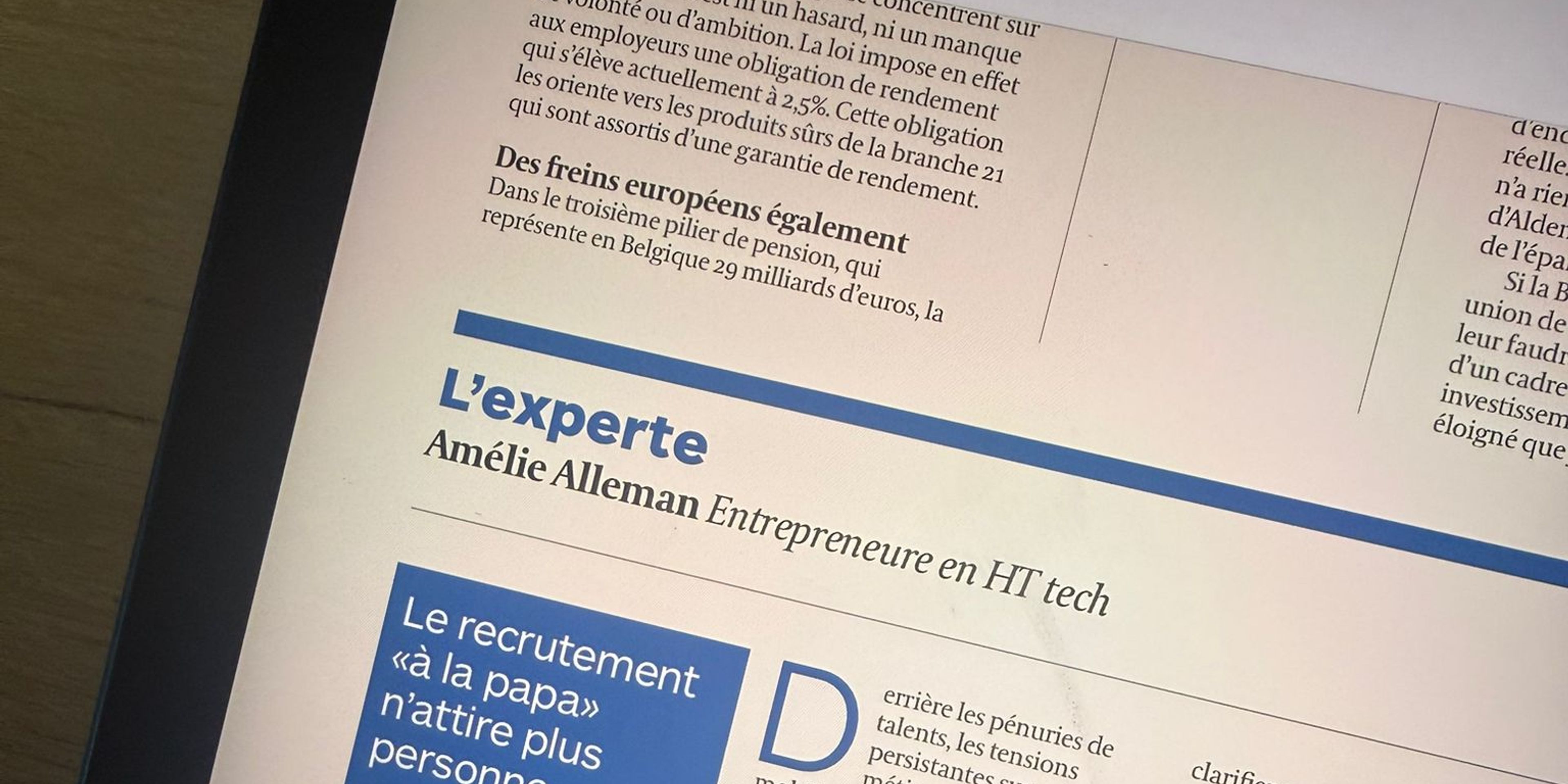
Old-school hiring doesn’t hire anyone anymore, carte blanche in L’Echo

Recruitment is a showcase. Companies that struggle to hire are often those whose practices don’t match their rhetoric. Behind talent shortages, ongoing tensions in certain professions, and the low mobility observed in the job market lies an issue far broader than a simple human resources problem. Recruitment has become one of the most reliable indicators of how companies are actually governed—and of their ability to make decisions, stand by their choices, and plan for the long term. When recruitment stalls, it’s not just positions that remain unfilled. Career paths become frozen, decisions fail to materialize, and value is no longer created. This dysfunction is rarely due to an absolute shortage of skills. Much more often, it is a symptom of organizations that struggle to clarify who they are, what they expect, and what they are prepared to offer. Very observant talents In many companies, recruitment is still treated as an operational, reactive function, sometimes purely administrative. A job ad is posted, a few channels are activated, and then people are surprised that applications don’t come in as expected or don’t match what they’re looking for. That way of thinking belongs to another era. Today, the recruitment funnel no longer starts with the job offer, but with perception. Before applying, talented people observe. They read, compare, and assess the credibility of a project and the consistency of its message. They try to understand how decisions are made, what the relationship is to power, autonomy, and responsibility. In other words, they evaluate governance long before they consider a position. This reality becomes particularly clear in the candidate experience. Response times, clarity of the process, quality of interactions, ability to make decisions: every touchpoint says something very concrete about the company. Far more than institutional speeches or the promises displayed on a careers site. The lived experience never lies. SMEs are more exposed In SMEs in particular, where responsibilities are concentrated and communication channels are short, recruitment acts like a magnifying glass. It is often at this very moment that candidates understand what it really means to work in this organization: where the grey areas lie, how trade-offs are made, and how much room is given to trust and initiative. Recruitment is therefore not just an entry gate. It is a stage where everything is on display. And like any stage, it forgives neither improvisation nor inconsistency. Companies that struggle to recruit are often those that struggle to make decisions, to set priorities, and to align their practices with their rhetoric. Every interaction with talent says something very concrete about the company. The experience people have never lies. Conversely, those who are getting ahead have understood that recruiting is neither a collection of tools nor a series of best practices. It is a coherent system, aligned with a particular way of leading. They are not trying to attract everyone. They fully own what they are, what they are not, and what they no longer want to be. Because recruiting is never a neutral act. It means accepting certain skills, rejecting others, opening up or closing off career paths. With constant hesitation and half-measures, old-school “dad-style” recruiting ends up not hiring anyone at all. Conversely, clear, demanding, and fully owned recruitment says something essential: the company knows how to make decisions—and it knows where it’s going. Amélie Alleman - Opinion piece published in L'Echo - 27 February 2026

SMEs: Digital Recruitment & Salary Transparency – The Strategic Shift I've Seen Transform Businesses

The pace is accelerating. I see it, I hear it: for SMEs, recruitment has become a real headache. Time flies, good profiles are scarce, and competition from large groups is fierce. But behind these challenges lies a huge opportunity to transform your business. This is a deep conviction at Jobloom, and I am here to share it with you. In this ever-evolving landscape, two subjects stand out as pillars for your SME's growth: digital recruitment and salary transparency. These are not just buzzwords, but the new rules of the game, those that separate businesses that suffer from those that thrive. I've seen SME leaders embrace them and radically transform their approach. It's this vision we want to convey to you. That's why, on Friday, March 6th , we are organizing an exclusive SME breakfast at Foster Farm Rosières. A morning designed to offer you ultra-concrete keys and enable you to activate these strategic levers. Part 1: Is Your Recruitment Ready for 2026? My Method for Digitalizing It. Let's be honest: "old-school" recruitment methods are a drag on your growth. Spending hours sorting CVs in an inbox, posting ads that reach no one, or offering a process that discourages the best talent... all of this costs you much more than money. It costs you time, energy, and opportunities. During this event, I will share my approach with you, the one I've developed with Jobloom, to show you how to: Understand the "why" behind digitalization: Beyond the tools, it's a matter of vision. Why is this the ideal time to turn your recruitment into a local competitive advantage? Master the "how" with simplicity: We will break down a simple and effective digital recruitment process, from the art of attracting the right talent (how to become visible everywhere with one click?) to onboarding your new recruits (how to prevent them from disappearing along the way?). Massively save time and REALLY attract the right people: I will reveal concrete strategies to reduce your managers' administrative time by up to 80% and multiply your qualified applications by 20. Yes, the numbers speak for themselves! My objective is clear: to give you the means to make recruitment an accelerator, not a burden, for your SME. Part 2: Salary Transparency & Data – Axelle Peeters' Secrets to Building Trust Attracting talent is one thing. Keeping them and building a loyal team is another. And that's where salary transparency comes in. Between new regulations and growing employee expectations, it has become an unavoidable topic. But it is also a huge opportunity. I will have the privilege of welcoming Axelle Peeters from Coreus, an expert whose vision will change your perception of the HR function. In 30 dense and inspiring minutes, Axelle will show you how to: Transform "constraints" into "levers": Far from being a simple obligation, salary transparency can strengthen trust, equity, and performance within your SME. Use data as a strategic compass: Discover how digitalization and analytics can help you build fair, understandable, and, above all, effective salary policies to attract and retain the best. Axelle will prove to you that data is not just about numbers. It is the engine for giving your HR a strategic and profoundly human role. Get Ahead: Join Us! This breakfast is not just any event. It's a unique opportunity to step out of your daily routine, exchange with peers, ask all your questions, and leave with a concrete action plan. We will welcome you from 9 am with coffee and croissants, in a convivial atmosphere conducive to discussions. I am convinced that every SME can become a benchmark employer, capable of competing with the biggest players in talent attraction. It's time to master these new rules of the game. The event is free, but places are limited and reserved for companies. I reserve my spot for the SME breakfast on March 6th! Looking forward to seeing you there, Amélie Alleman,