
In a tight labor market, attracting and engaging top talent has become just as strategic as winning over your customers. Yet far too many companies still treat recruitment as an administrative, secondary function with little power to differentiate.
What if we changed this perspective?
What if your future candidates were actually your most valuable customers—the ones who shape your growth, your culture, and your ability to innovate?
Recruitment is no longer just an HR process; it has now become a digital experience.
55% of candidates turn down an offer because of a poor process. 50% say they are disappointed with their candidate experience.
Most candidates expect a smooth, transparent, and engaging experience. They compare your hiring process to the experience they have with brands, whether they’re buying a product or subscribing to a service.
To attract these profiles, it’s no longer enough to post a job ad and wait. You need to tell a story, create an experience, and turn interest into action—just like a successful marketing strategy does.
Your candidates are customers, with specific expectations.
Just like your external clients, your future collaborators:
- want to be won over from the very first interaction
- expect clear and mobile-friendly navigation
- want a seamless experience from start to finish
- waiting for transparency about the process
And above all, they’re ready to say yes—or no—with just a few clicks.
Jobloom: recruitment designed as a customer experience
Our solution has been designed to make recruitment a qualitative, engaging, and high‑performing experience.
- A careers site that reflects who you are
Jobloom creates a personalized, mobile‑first careers site for you, optimized to convert. It’s not just a job listings page: it’s an immersive experience that tells your story—your culture, your values, your vision—and makes people want to apply. - Maximum visibility
With automatic multi-posting to more than 100 platforms, your job ads appear where your future talents spend their time: Google Jobs, LinkedIn Recruiter, Indeed, VDAB, Forem, … - A smooth candidate journey
Jobloom offers an intuitive one-click candidate journey, designed to reduce drop-offs and increase conversion rates. A conversion generally 20 to 30 times higher than traditional recruitment websites. - An AI-powered ATS management tool to automate and save time: with the integrated ATS, you centralize all your applications, automate repetitive tasks, track profile status in real time, and optimize your interactions with automation tools.
Recruitment = marketing + data + experience
What sets Jobloom apart isn’t just the technology. It’s the philosophy:
- Treat every candidate as a potential customer of your employer brand
- Create a journey that convinces him, step by step
- Measure, optimize, and accelerate your results
This approach turns hesitant visitors into motivated applicants. And well-treated applicants into ambassadors, even if they don’t end up joining your team.
The real advantage for SMEs
With Jobloom:
- Your offers gain visibility
- You save time
- You attract the right profiles
- You are building a real employer brand
The best talent today isn’t just recruitable, they’re selective. If you don’t offer them an experience on par with a customer journey, they won’t apply.
Your candidates are more than just résumés. They’re customers you need to win over. And Jobloom is here to help you convince them.
The latest

We thought we needed a powerful ATS. In reality, we needed an efficient ATS.
That’s what one of our clients realized when they decided to switch from Workday to Jobloom. This SME was already using our career site and our multi-posting solution. For its ATS, it had chosen one of the global market leaders. Yet in day-to-day use, it wasn’t power that made the difference. It was simplicity, speed, and efficiency. 🚀 Then came a simple question: 👉 Why are our recruiters spending so much time in their tool? Digging deeper, several frustrations emerged: ❌ Complicated collaboration with several hiring managers ❌ Impossible to easily find a candidate already met a few months ago in the database ❌ Tedious multilingual posting ❌ Reporting poorly aligned with the KPIs actually tracked by the company ❌ Few tools to showcase job ads on social media The result? They decided to replace their ATS with that of Jobloom Not to get more features. But to get the right features. ✅ Smart search in the candidate database thanks to AI ✅ Smooth collaboration between recruiters and managers ✅ Simplified multilingual posting ✅ Reporting tailored to their indicators ✅ Automatic creation of carousels to promote jobs Sometimes, the best solution isn’t the biggest one. It’s the one that truly meets your teams’ needs. And you, how many features of your ATS do you actually use on a daily basis? 🤔

Recrutement_Final_V7_Definitif_Bis_V2.xlsx
If this filename looks normal to you... it might be time to get yourself an ATS. 😅 At first, Excel gets the job done. Then come: ➡️ 150 applications ➡️ 4 recruitments in parallel ➡️ CVs in Outlook or in Dropbox folders ➡️ Comments in his notebook ➡️ Managers who keep asking: "Where do we stand?" And suddenly, you’re spending more time managing your file than recruiting. The problem isn’t Excel. The problem is that Excel works with rows. No candidates. No processes. No recruitment. In 2026, with AI, job boards, and hundreds of applications sometimes arriving within just a few days, continuing to recruit using Excel is a bit like trying to steer your company’s growth with a spreadsheet. It works. Until the day it stops working. I explored this topic in my latest article. And let’s be honest… who’s already worked on a version even longer than the one in the title? 😂

What if AI made recruitment more human?
Yesterday, a prospect told me something that every ATS vendor should hear. "I'm looking for a solution that will free up my time thanks to AI so I can put humans back at the heart of recruitment." Not to recruit without recruiters. Not to replace HR. Not to automate human relationships. But to win back time. We sell AI as a machine capable of replacing humans. In the field, I see exactly the opposite. Recruiters are drowning in administrative tasks. What they want is less data entry. Fewer clicks. Less admin. And more conversations. More listening. More closeness. Technology should never be the hero of recruitment. The hero is the recruiter. Technology should simply allow them to do what they do best: create human connections.

I’ve analyzed hundreds of SME job postings.
Most of them still look like this: “We’re looking for a dynamic, autonomous, versatile candidate… to join a great team.” What that means for the candidate: Nothing. Absolutely nothing. Today, the best job ads answer 3 questions: • Why you? • Why this job? • Why now? And I’d add a bonus: What’s our company vision? Recruitment has become marketing. Yet very few companies have understood this.
You might also like

“Stand out from the crowd”: building a strong employer brand when everyone is saying the same thing
I have participated in over a thousand recruitments in my career. And almost every time, I've heard the same phrases: “We want to attract good profiles.” “We want to stand out.” “We want people to talk about us.” But when I dig deeper and ask this simple question: What's your difference, what do you offer that others don't have? ... silence falls. The job market has evolved. Talents have choices. They compare. They question. They google. And faced with an avalanche of 'great atmosphere, tight-knit team, stimulating job' offers, everything becomes blurred. This is where the employer brand becomes central. Not just as a nice varnish. But as a lever for clarity, attractiveness, and consistency. Employer branding: what are we (really) talking about? No, it's not a logo on a job posting or a corporate video. The employer brand is the perception that people have of you as an employer. It exists whether you have formalized it or not. It expresses itself: In the opinions (formal or informal) of your colleagues In your interactions with the candidates Regarding the quality of your onboarding In what you post (or do not post) In your silences, as much as in your words That's what a talent feels, even before meeting you. The real challenge: “stand out from the crowd” Everyone wants to stand out. But everyone uses the same words, the same codes, the same formulas. Result? Nothing stands out. The vanilla HR approach prevails. And the candidate moves from one career page to another without ever feeling that famous “wow, this is where I want to work.” Le “stand out from the crowd” ne se joue pas sur du marketing flashy. Il repose sur 3 fondamentaux : The clarity of your employer value proposition (EVP) → Who are you? What are your actual promises? What do people experience in your company? The alignment between speech and reality → The worst thing for a talent is to experience dissonance once recruited. It breaks trust, commitment... and retention. The ability to share what makes you unique → No need to be Google. You just have to be authentic. And understand what resonates with your targets. The real challenges of HR professionals and employer branding today What I hear most on the ground: Not enough bandwidth → too many projects, too few hands No dedicated team → we make do with what we have Lack of internal buy-in → constant need to 'evangelize' No clarity on the right indicators → what is a successful employer brand? Silos between HR, marketing, and communications → each moving forward with their own priorities Tensions between global and local → hard to tell a coherent story internationally These are real issues. And we won't solve them with a quick 'rebranding' or a video that ticks all the boxes. So, what are we doing? Where do we start? The answer is often simpler than we think: We start by listening. What the employees say. What they experience. What they like (or not). We clarify our DNA. The true lived values. The differences. The key moments of the employee experience. We align the touchpoints. From the career site to social networks, through the job offer and the interview. Everything must tell the same story. And above all: we don't try to please everyone. We aim to attract the right people. Those for whom our culture, our challenges, our style will truly resonate. My own challenge at the moment? It's about bandwidth. The more we progress, the more the subject fascinates... and the more I'm asked to intervene, to audit, to rewrite, to co-construct. And sometimes, I dream of an employer brand team! But even without a team, it 'simply' takes laying the right foundations. And to build, step by step, a true and powerful story. And you? What's your biggest challenge today to “stand out from the crowd”? And if you feel like talking about it? Write to me, I love these exchanges.
Employer branding: stop selling dreams, let your employees tell the real story.
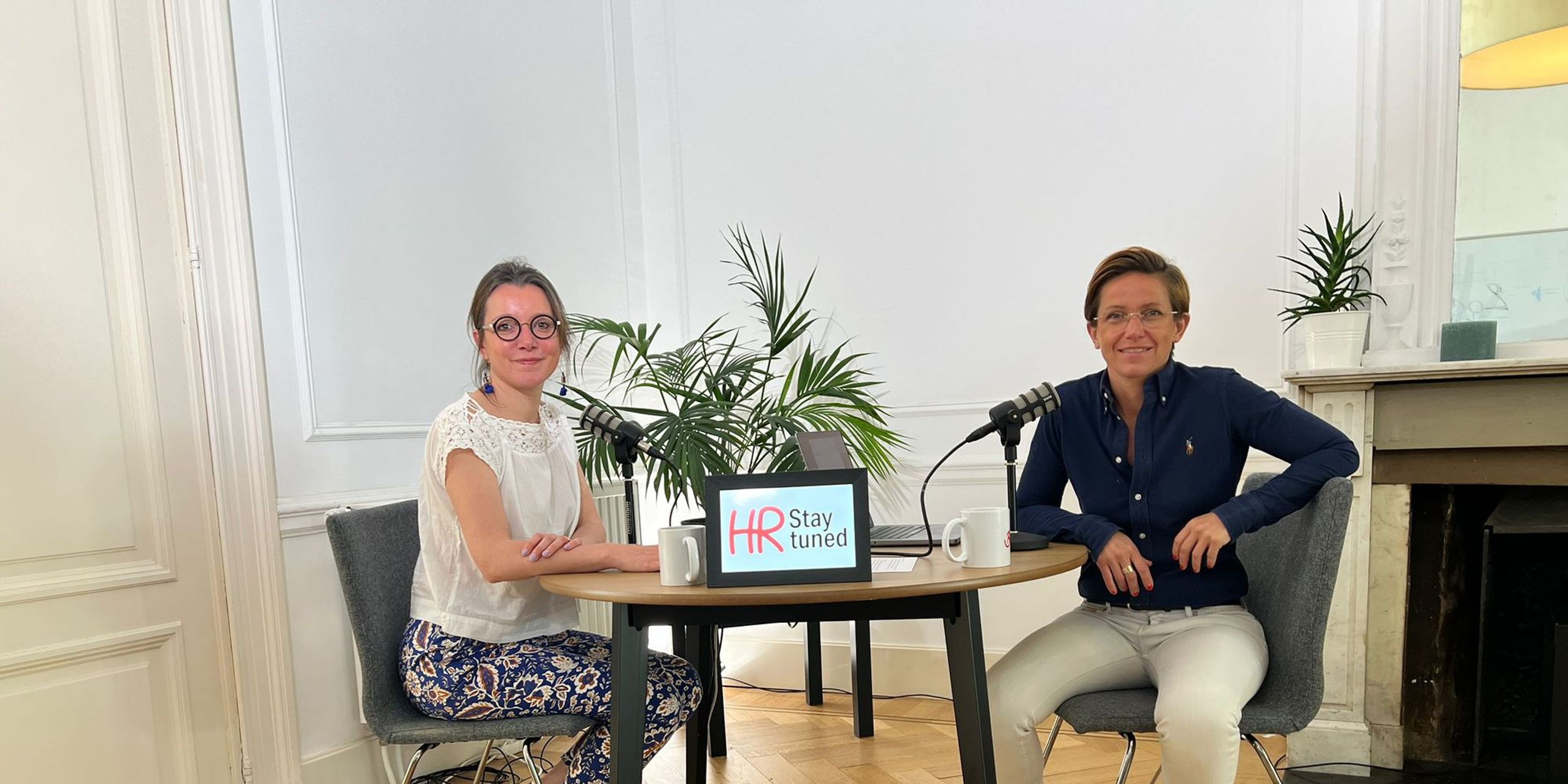
Is your employer brand lacking authenticity? Stop selling dreams and find out how to turn your employees into your best ambassadors. There's a scene I see all too often. A company spends a fortune on a beautiful recruitment campaign. Sleek visuals, inspiring slogans, promises of fulfillment... on paper, it's perfect. But internally, employees roll their eyes. Sometimes they laugh. Sometimes they're just cynical. This gap, this wide discrepancy between the storefront and the back office, is the silent cancer of the employer brand. During my recent conversation with Anne-Sophie Noël, whom I had the pleasure of interviewing in episode 32 of the HR Stay Tuned podcast, she pointed out a painful truth with a candor that struck me: "If there's a discrepancy between what a company says about itself in external communications, its ambassadors, that is its employees, will very quickly say: 'No, no, no, that's bullshit, it's not exactly like that.'" "Bullshit". The word is out. And it's accurate. In an era where trust is such a rare currency, it's time to stop this corporate charade. Let's stop selling dreams. Let's start sharing reality. The credibility crisis: why no one believes in your stock photos anymore The problem is not new. In fact, it's the topic I covered in my final thesis: the alignment between internal and external communication. Even back then, it was clear to me. And today, the phenomenon is amplified by a radical transparency imposed by the digital world. Your candidates are not naive. Even before applying, they have already conducted their research on social media, or by contacting former employees. They know. And the numbers confirm it. According to a study by LinkedIn Talent Solutions, candidates trust employees of a company three times more than the company itself to get credible information about the work environment. Three times. Reread this statistic. It marks the death certificate of top-down and sanitized corporate communication. The career site with actors smiling around a coffee machine? No one believes it. The CEO's polished speech on "values"? It is immediately contrasted with the stories, good or bad, that the teams share on the ground. As Anne-Sophie aptly puts it, your true ambassadors are not your PR agencies. " The employees of a company are its first ambassadors. " They are your only source of truth. Ignoring them, or worse, contradicting them, is not just a mistake. It's brand suicide. The authenticity revolution: co-creating your story, not making it up So, what do we do? Do we give up? On the contrary. We are radically changing paradigms. The solution is disarmingly simple, but it requires courage: we must make authenticity a strategy. Anne-Sophie summed it up perfectly: " A good employer branding campaign, to me, is one that is done with the employees. " This goes well beyond a few scripted video testimonials. It's about co-creating your story. This is called "Employee Advocacy" , but let's get rid of the jargon. In plain terms, it's about creating an environment where your teams are not only heard, but also feel proud and safe to share their actual experiences. How do we do it, practically speaking? Listen before you speak: What do your colleagues REALLY like about you? What excites them? What frustrates them? Conduct surveys, focus groups, informal conversations. Look for the raw material, not the polish. Identify your true storytellers: Give a voice to everyone. Not just to managers or the "good students". Highlight the technician who solves complex problems, the accountant who loves the atmosphere of her team, the young talent who has been well integrated. Their experiences are a thousand times more powerful than any slogan. Provide them with a stage, not a script: Your career site should be their platform. Your LinkedIn account should showcase their achievements. Companies like Patagonia or Decathlon don't burden themselves with corporate speak; they show their employees in action, living the passion for sports or the outdoors that is the brand's DNA. According to a report by MSLGroup, messages shared by employees have a reach 561% greater than the same messages shared through the brand's official channels. It's a monumental marketing and HR lever, based on trust. My struggle: to make authenticity accessible I have held this belief for years. It's what recently drove me to launch Jobloom, my new venture. I've seen too many companies wanting to be authentic, but facing a lack of time or budget to create quality content. My obsession is to make this authenticity 'sexy' and accessible. As I was explaining to Anne-Sophie, we directly integrate the creation of this lively and embodied content into the design of career websites. We help companies to interview their talents, to turn these gems into captivating stories, so that their employer brand can finally be a true and attractive reflection of their culture. Because in the end, the best employer brand isn't the one that promises the moon. It's the one that tells you: "This is who we are, with our strengths, our challenges, and the incredible people who keep things running. If that speaks to you, join us." It's an invitation, not an advertisement. And that's the whole difference.

What if your employees became your best allies for the future?
Your talents of tomorrow are already with you. Discover how internal mobility transforms your talent management, boosts engagement, and secures your future. In a world where there is constant talk of a talent war, the search for meaning at work, and more humane governance, one question deserves to be asked: what if your employees became your best allies in building the future of your company? I explored this topic in an exciting episode of my podcast HR Stay Tuned , alongside Sabine Colson , Investment Manager at Wallonie Entreprendre , an expert in management buyouts and employee share ownership . Together, we discussed strategy, HR, business transfer, emotions... and above all, a different way of doing business. Why talk about management buyout and employee share ownership in 2025? Because the context demands it. The aging of SME leaders makes business succession a critical economic issue. Today's talents (and even more so those of tomorrow) no longer just want to “work”. They want to participate , build , influence . Commitment becomes a strategic factor, not just HR. In this context, the mechanisms of management buyout (MBO) or employee share ownership allow for an internal, gradual, aligned transition. They create continuity , strengthen the local roots and stimulate performance . MBO vs Employee Shareholding: What's the Difference? Two approaches, one same philosophy. ➤ A management buyout is when one or more executives or managers acquire all or part of the company. E.g.: A CEO and their committee take over the company from a founder who is retiring. ➤ Employee share ownership is when the capital is opened up to a broader segment of the workforce. For example: All employees can invest in their company, often through a collective investment vehicle. What these two models have in common: ✅ A desire to sustain the business project. ✅ A strategic involvement of the teams strengthened. ✅ A more shared governance and more humane. When the human becomes strategic What Sabine Colson brilliantly highlights is that these structures are not just economic. They are emotional , human , deeply connected to the corporate culture . “At Technord or I-care, you can see that employees no longer say 'I work for', but 'I am part of'. It changes everything.” – Sabine Colson Employee shareholding creates pride , accountability , but also a new form of shared leadership. Practically speaking, how does one go about it? No need to have an immediate resale project. Here are some concrete ideas to start a strategic reflection: Map your internal talents : who might be ready to take over? to get more involved? Organize open discussion times on the company's long-term vision. Train your teams in governance, finance, risk : commitment comes through understanding. Contact an organization like Wallonie Entreprendre , which can support these transitions, even from the very early stages. And above all: dare to ask the question , even if everything is not ready. My personal feedback When I raised funds for Jobbloom , I also asked myself: what kind of governance do I want? What role for my team in this project? These are topics that deeply challenge our stance as leaders. It's not just about capital or strategy. It's a vision of the company . Of its mission. Of its future. Conclusion: the company as a collective adventure Le management buyout et l’ actionnariat salarié ne sont pas des solutions miracles. Mais ce sont des outils puissants pour réconcilier performance, pérennité et engagement . And what if, instead of looking for an external buyer, we looked around us? What if, instead of looking for solutions to resignations, demotivation, the war for talent... we opened the door to the talents we already have? Thanks to Sabine Colson for her valuable insights.

Corporate Culture: The Secret to an Irresistible Employer Brand
Forget foosball. A strong employer brand isn't what you promise, but what you are. Discover how to make your company culture your greatest asset. In a job market where attracting and retaining talent has become an art, corporate culture is no longer a mere "nice-to-have" option. It's the foundation, the DNA upon which an employer brand that is authentic and, dare we say, irresistible is built. But how do we move from nice words on a poster to a reality that is lived and embodied by every employee? To decipher this fascinating topic, we had the pleasure of discussing with Barbara Vandermaesen, co-founder of the consulting firm Humind, in our latest podcast. With her experience as a consultant and HR director, she provided us with valuable insights on how to build a culture that not only attracts but also makes people want to stay. Let's discover together the secrets to making your culture the most powerful of your assets. What is Corporate Culture, Concretely? Forget the academic definitions. Barbara offers us a much more evocative metaphor: imagine entering a house. Before even seeing the details, you feel an atmosphere. It's the smell, the warmth, the soul of the place. The corporate culture , that's exactly what it is. "It's that soul, that smell, that atmosphere that is created within the organization. [...] It's something that you feel." - Barbara Vandermaesen A strong culture is not one where everyone thinks the same. It's a consistent culture. It's when the experience you have, whether as a candidate, employee, or customer, is the same at every touchpoint. From the wallpaper on Teams to the onboarding , including the way successes are celebrated. The 4 Pillars of a Living and High-Performing Culture So, how do we build this consistency? According to Humind, it all rests on a pragmatic four-dimensional model. To omit any one of them is to risk seeing your beautiful cultural edifice collapse. 1. The Expression: Communicating Your DNA This is the most visible part. It's about defining and clearly communicating who you are. Define your values : What do they actually mean to you? Create a manifesto : Share your story, your "why". Deploy a communication plan : Use all channels (intranet, posters, meetings) to ensure the message is heard. But beware, this is only the beginning. A culture that remains at the stage of expression is an empty shell. 2. Modeling: Embodying Behaviors A value like "innovation" is good. But what does it mean in everyday life? Translate values into observable behaviors : Does "Innovate" mean "having the right to make mistakes"? "Suggesting ideas outside of one's scope"? Leading by example : Managers and executives must be the first to embody these behaviors. If you advocate for collaboration, but the leaders work in silos, the message gets mixed. Train and support : Help your teams understand and adopt these new habits. 3. Anchoring: Aligning Your HR Processes This is where the magic happens (or not!). Your culture should permeate all of your organizational processes, especially your HR levers. Recruitment : Does your hiring process reflect your values ? Are the interview questions aligned? Onboarding : Welcoming new members is a crucial moment to convey the culture. Performance Management : Do you assess and reward the behaviors you want to promote? Internal communication : Your intranet, newsletters, events... everything should reflect your culture. 4. Empathy: Taking the Pulse of Your Organization One can only improve what one measures. To know if your culture truly lives, one must listen. Quantitative surveys : Regular polls to measure adherence to values and the social climate. Qualitative approach : Interviews, focus groups, workshops to understand the nuances. Observation : Pay attention to the weak signals, the informal rituals, and what is said around the coffee machine. By working on these four dimensions in a balanced way, you create a virtuous circle where the culture is continuously strengthened. From Culture to Recruitment: Culture Fit or Culture Add? This is a strategic question that every human resources professional should ask themselves. Should we recruit people who are like us ( Culture Fit ) or people who complement us ( Culture Add )? Culture Fit : It's the path of comfort. We recruit "clones" who integrate easily. The risk? Groupthink, stagnation, and reduced adaptability. The Culture Add : It's the path to evolution. We hire diverse profiles that bring new perspectives and challenge the status quo. It's essential for innovation, but it requires a greater integration effort to ensure the individual doesn't feel like an "alien". The right answer depends on your maturity and your HR strategy . What's important is to consciously make this choice: are we looking to strengthen our current culture or to evolve it? Showcasing Your Culture: Employer Branding in Action Once your culture is defined, embodied, and established, it's time to make it shine to attract the talents that match you. Authenticity above all : Your employer brand should be a true reflection of your internal reality. False promises create disappointments that are costly in terms of turnover and reputation. Internal-External Coherence : The message conveyed on your career site, in your videos, or on Glassdoor must be aligned with the employee experience . Any discrepancy is quickly noticed and harms your credibility. Les Ambassadeurs, vos meilleurs alliés : Le leadership est le premier ambassadeur. Mais ne vous arrêtez pas là ! Identifiez des collaborateurs à tous les niveaux qui incarnent votre culture et donnez-leur les moyens de la partager. Comme le suggère Barbara, pourquoi ne pas les impliquer dans l' onboarding des nouveaux arrivants ? C'est une manière incroyablement puissante de transmettre l'ADN de l'entreprise dès le premier jour. In Conclusion Building a strong corporate culture and an irresistible employer brand is not a sprint, but a marathon. It requires strategy , consistency, listening, and unwavering commitment from leadership . True success is when culture is no longer an "HR project" but everyone's business. It's when every interaction, every process, every communication reinforces who you are. That's how you will not only create a competitive edge to attract the best, but also a work environment where well-being and commitment lead to sustained performance. And you, where are you in building your culture? What are your biggest challenges? Share your experience in the comments!

Why your employer brand is your number one asset for recruiting in 2025
In 2025, a strong employer brand is the number one lever for recruiting the best talent. Discover how to improve your attractiveness, optimize your career site and reduce your recruitment costs thanks to SEO best practices, ambassador testimonies and proven strategies. Practical cases and concrete advice at the end. Introduction: The employer brand, a crucial tool in 2025 In 2025, recruitment is no longer limited to posting a job offer and waiting for applications. The war for talent is intensifying, and businesses need to redouble their efforts to attract and retain the best talent. A strong employer brand has become a decisive factor in distinguishing yourself and convincing the most qualified candidates. According to a study by LinkedIn Talent Solutions , 76% of recruiters consider the employer brand to be a major strategic lever for attracting talent. Another study of Glassdoor reveals that companies with a strong employer image receive 50% more qualified applications and reduce their cost per hire by 43% . In this article, we look at why and how a well-defined employer brand can transform your recruitment strategy. 1. The direct impact of a strong employer brand on recruitment A company with an attractive employer brand attracts talent more easily. But what does that mean in practice? A well-defined employer brand has a direct influence on the perception of candidates , improves talent retention and has a positive impact on employee engagement . A company that takes care of its employer image also sees its job offers perform better on Google for Jobs and LinkedIn . A good employer positioning therefore improves the quality of applications and reduces turnover, a crucial issue for many industries such as hospitality or retail. 📌 Key takeaways: A strong employer brand directly improves the quality of applications and reduces turnover. It shapes talent perception and increases employee engagement. Les entreprises qui investissent dans leur image d'employeur réduisent leurs coûts de recrutement tout en attirant des candidats mieux adaptés. 2. How can you effectively strengthen your employer brand? To build a strong employer brand, several levers must be activated: ✔ An attractive and optimized career site : A well-structured and informative career page is crucial. Include employee testimonials, FAQs about your company culture, and emphasize opportunities for growth. ✔ An active presence on social media : LinkedIn, Instagram, and TikTok have become key platforms for recruitment. One in two candidates checks out a company's social media before applying . ✔ Engaging job descriptions : Write compelling job descriptions that reflect your values and benefits. Use an authentic voice and a clear layout. ✔ Internal ambassadors : Encourage your employees to share their experiences and stories. Genuine content gives confidence to potential candidates. 💡 Example: Google and L’Oréal have boosted their attractiveness by adopting an employer branding strategy focused on transparency and authenticity. Google : a mis en avant sa culture de l'innovation et du bien-être des employés à travers des vidéos immersives sur YouTube et des témoignages partagés sur LinkedIn. Ils ont également lancé un programme d'ambassadeurs internes où les employés partagent leur quotidien professionnel via des blogs et des publications sur les réseaux sociaux. L’Oréal: created engaging HR communication by telling inspiring career stories and offering behind-the-scenes glimpses of the company on Instagram and TikTok. They also encouraged employees to share their experiences on Glassdoor and LinkedIn, strengthening their credibility with potential candidates. 3. SEO and employer brand: Attracting the right talent via your career site Your career site is one of the first showcases of your company for candidates. A poorly referenced or too slow site can negatively impact your ability to attract the right profiles. SEO best practices for a successful career site ✔ Optimization of job listings with relevant keywords. ✔ Using Google for Jobs to maximize visibility and appear at the top of searches. ✔ Quick loading time to prevent drop-offs (53% of visitors leave a page if it takes more than 3 seconds to load). ✔ Mobile-friendly version , because 60% of applicants apply from their phone. 👉 Also to read: SEO Optimization for Job Vacancies: The Complete Guide 4. Case Study: How Leonidas Enhanced Its Recruitment with a Strong Employer Brand Leonidas, an iconic Belgian confectionery brand, needed to attract international talent while strengthening its employer image. By collaborating with Jobloom, they have: ✔ Increased the number of visitors to their career site to 4,500 per month . ✔ Received 500 qualified resumes monthly . ✔ Optimized their employer brand image in Europe, by improving their storytelling and their presence on social networks. 👉 Also to read: Leonidas: Strengthening the Employer Brand and Recruiting Internationally with Jobloom 5. Common mistakes that damage your employer brand Even the most attractive companies can make mistakes that hinder their recruitment. Here are the most common ones: 🚫 A neglected career site → Lack of updates, outdated visuals, candidate journey that is too long or confusing. An outdated site sends the wrong signal to talent. 🚫 Corporate values that are not very credible → A discourse that is too corporate or too far from internal reality creates a dissonance perceived by candidates. 🚫 An absence of HR storytelling → Candidates want concrete and authentic testimonies. Without human content, it's hard to capture their interest. 🚫 A lack of interaction on social networks → No response to comments, lack of commitment from internal teams: this gives a passive image of your business. 🚫 Unattractive job offers → Ads that are too generic, without highlighting the advantages for the candidate. Poor wording can drastically reduce the number of qualified applications. 6. Why will investing in employer branding today have an impact on your recruitment in 2030? Working on your employer brand is a long-term investment. Businesses that start early reap lasting benefits: ✔ Better talent retention → A strong employer brand reduces turnover and improves employee engagement. ✔ Increase in the HR Net Promoter Score → Satisfied employees become your best ambassadors and attract new talent. ✔ Reduced recruitment costs → A better reputation means less dependence on expensive job boards and recruitment agencies. ✔ Adapting to the new expectations of candidates → Flexibility, well-being at work and corporate values have become key criteria in choosing an employer. Conclusion Building a strong employer brand is now a key strategic asset to attract talent and optimize your recruitments. Investing in transparent communication, optimizing your career site, and relying on internal ambassadors can enhance your appeal and reduce recruitment costs. 🚀 Do you need support to strengthen your employer brand and optimize your career site? Contact Jobloom for a free demo!