How to choose an ATS, a recruitment software, in 2026?

In just a few years, the market for ATS (Applicant Tracking System) recruitment software has exploded.
More than 85% of European companies have already digitized all or part of their processes, compared with only 40% in 2020. In Belgium, a very dynamic but fragmented market, there are now more than 150 HR solutions available.
Using an ATS has now become a direct performance driver for HR; it is a strategic asset for attracting top talent, speeding up your processes, and informing your decision-making. Faced with an overabundant market, the question is no longer about finding the most comprehensive or complex software, but the one that will truly improve the quality of your recruitment process, the one that matches your needs.
In this article, we help you identify the key criteria tochoose the right ATS for your company or small business.
Using an ATS is now a direct performance driver for HR; it is a strategic asset for attracting top talent, speeding up your processes, and informing your decision-making.
Faced with an overwhelming range of options, the question is no longer about finding the most comprehensive or complex software, but the one that will truly improve the quality of your recruitment process, the one that matches your needs.
In this article, we help you identify the key criteria forchoosing the right ATS for your company or small business.
Recruitment software, also known as an ATS (Applicant Tracking System), is an essential tool for managing, automating, and optimizing the hiring process. Used by HR teams and recruiters, it centralizes all applications and enables efficient tracking of every stage, from posting job offers through to hiring.

An ATS lets you post job ads on multiple job boards and recruitment sites in just a few clicks (multi-posting), while centralizing all applications in a single interface.

Thanks to features for CV parsing (intelligent CV sorting), filtering, and candidate tracking, recruitment software or an ATS streamlines shortlisting and improves the quality of your hires.

The ATS automates repetitive tasks: sending emails, managing candidate responses, scheduling interviews. This makes it possible to reduce hiring time and improve the overall productivity of the HR department

Modern ATS include HR reporting tools and sometimes automated matching, to identify relevant profiles more quickly.

By 2026, having an ATS has become a market standard rather than a competitive advantage. The difference no longer lies in the tool itself, but in how smooth the journey is for candidates. User experience is now the key criterion for recruitment performance.
Marc-Antoine de Varennes
Chief Talent Strategist chez Nexia Global
An ATS (Applicant Tracking System) is now aimed at all companies, regardless of their size, industry, or level of recruitment maturity. As soon as it becomes necessary to structure, centralize, and optimize hiring, using recruitment software delivers real value.
The real danger is no longer just hiring the wrong people, but losing top talent because of a fragmented candidate journey, outdated application management tools that can’t handle a volume that has more than doubled in a year, or an obsolete careers site that no longer reflects your employer brand. Today, your ATS is no longer an administrative tool. It’s a candidate conversion lever. A poor ATS doesn’t just slow down your hiring. It makes you lose talent.

Amélie Alleman
CEO of Jobloom
In an increasingly crowded recruitment software market, it is essential to focus on the features that have a real impact on your hiring performance.
Here are the must‑knows to keep in mind for 2026:
A good ATS should let you post your job openings to multiple job boards (LinkedIn, Indeed, Google Jobs, etc.) in a single action.
Benefit: you immediately increase your visibility and can generate up to 2 to 3 times more applications, without any additional effort. You don’t have to pay for each tool separately or spend hours posting your job ads on the partners that are the best fit for your openings.
The recruitment software must include a simple module for creating a modern careers site, without any technical skills.
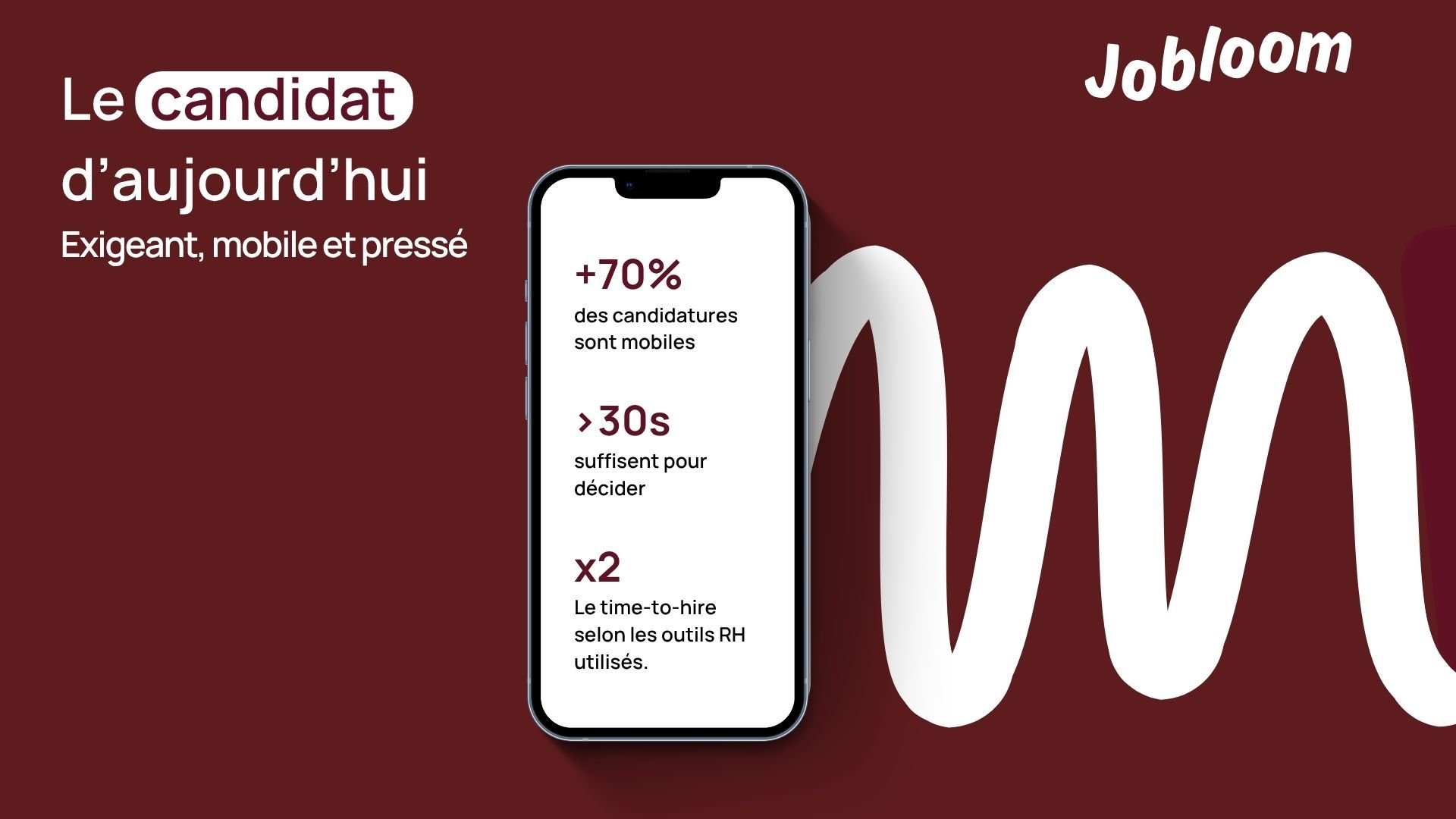
Benefit:you enhance your employer brand and increase your candidate conversion rate, especially on mobile, where more than 70% of applications are submitted.
Modern ATS use AI to write job postings, sort applications, and automate communications.
Benefit:you significantly reduce the time spent sorting through resumes and identify relevant profiles more quickly, while still maintaining personalized communication.
The application process must be simple, fast, and optimized for smartphones.
Benefit:you reduce drop-offs and maximize your conversion rate, while most applicants are applying on mobile.
An efficient ATS lets you accurately track your metrics (sources, conversion rates, time-to-hire).
Benefit:you identify the most effective channels and optimize your budget, with a direct impact on your ROI.
An ATS must integrate with your existing tools (HRIS, payroll, calendars, etc.) via APIs.
Benefit:you avoid re-entering data, improve its reliability, and streamline your entire HR process.
The tool must adapt to your growth and to the evolution of your needs.
Benefit:you avoid costly migrations and have a tool that can support your growth over the long term.
A next-generation ATS is no longer just about managing applications. It must help you create content that converts: career site copy, job family pages, job ads, with effective CTAs. This requires an analysis of your employer brand and the ability to generate content aligned with your positioning, values, and target audiences.
Benefit:you’re no longer just posting job ads, you’re actually “selling” them. You attract more qualified candidates and significantly improve your conversion rate, without having to go through an agency or commit major internal resources.
Not all your recruitment efforts target the same profiles. An engineer, a salesperson, or a worker will not expect the same message or the same arguments. A high-performing ATS must make it easy to create career microsites or persona-specific pages, with content, visuals, and messages tailored to each audience.
Benefit:you’re finally speaking the right language to your candidates. Result: more engagement, more relevant applications, and a much more impactful candidate experience.
1. An effective ATS isn’t measured by how many features it has, but by its ability to save you time, improve the quality of your hires, and optimize your results.
2. An ATS tailored to your company is a direct performance driver: companies that use one canreduce their recruitment time by up to 60%, while improvingthe match between identified profiles and the company’s needs
An ATS can transform your recruitment… provided it’s chosen methodically and implemented properly. More than the tool itself, it’s your approach that will make the difference.
Before you even start comparing solutions, begin by analyzing your current practices.
Where are you losing time? Which steps are slowing down your recruitment processes? What are the pain points for HR and managers?
This assessment helps identify your real challenges: number of applications, lack of visibility, difficulty tracking, no reporting, and so on. The goal is simple: choose a tool that addresses your concrete problems, not just a market trend.
Once you’ve identified your needs, organize them to avoid getting scattered.
Sort your expectations into essential, important, and secondary features.
Also include key elements such as:
This framework allows you to compare solutions objectively and avoid making choices based on impulse or infatuation.
Rather than multiplying demonstrations, select a few consistent tools and put them to the test.
Ask for personalized demos based on your use cases: posting job offers, managing applications, collaborating with hiring managers.
Involve future users in this phase.Their feedback is essential to confirm the tool’s simplicity and relevance. A good ATS should fit naturally into your daily work.
The success of an ATS depends as much on user adoption as on its features.
Prepare for the launch by structuring the support: configuration, training, helpdesk, internal communication.
Involve your teams from the very beginning,clarify the new processes and define tracking metrics. A well-deployed and well-used tool will make all the difference to your recruitment performance.

An ATS aligned with your HR strategy
Do you want to save time, handle a large volume of applications, or strengthen your employer brand? The tool must address your topstrategic priorities.

A solution tailored to your needs
User profiles, number of job postings, diversity of desired profiles: choose an ATS that’s sized for your realityon the ground.

Ease of use
Choose a tool that is intuitive, quick to roll out, and easy to use, both for HR teams and for managers.

Useful, practical features
Multi-posting of ads, process automation, reporting: focus on the features that deliver a real boost in efficiency.

AI at the service of recruitment
Artificial intelligence now makes it possible to simplify the identification of relevant profiles, speed up the screening of applications, and improve the writing of job postings as well as your social media content.

A valued employer brand
Showcase your employer brand and demonstrate to visitors on your careers site why they should come work for you.

A seamless mobile candidate experience
Make sure you can create a user-friendly, mobile-optimized career site with an easy-to-manage back office, and turn visitors into potential candidates.

Controlled compliance
Make sure the tool natively incorporates compliance with the GDPR as well as the requirements related to pay transparency.

An ATS like Jobloom
Allows you to centralize your applications, post your job offers across multiple channels with a single click, and provide candidates with a simple, seamless experience that is quick and easy to set up.
Between posting a job on a job board and using a recruitment agency, there’s often a gap: too many tools, too much complexity, not enough results. --> Jobloom streamlines this process and enables you to hire better, faster, and without friction.
Create a modern, fully customized, mobile-optimized career site without relying on a developer, an employer branding consultant, or a digital marketing expert. Yes, it’s possible!
Jobloom creates your career site in 48 hours, along with all its written content, to showcase your employer brand. But that’s not all.
Jobloom also creates sub-sites tailored to each persona in order to better reach different types of profiles and make them want to join your company. A one-click, simplified application process helps increase your application rates by offering a smooth candidate experience that matches today’s digital habits!
--> Result:you attract more candidates, showcase your employer brand, and improve your conversion rate from the very first visit, with an average of 24% of visitors going on to apply for your job offers. This is 20 to 30 times higher than market standards.
Post your job offers in just a few clicks on the most relevant platforms (LinkedIn Recruiter, Indeed, Google Jobs, etc.) and also benefit from tailored searches carried out by partners based on the roles you’re hiring for and their location. Smart, targeted distribution that enables high‑quality candidate sourcing.
--> Result:more visibility, more qualified applications, without wasting time or having to pay for each tool separately.
Centralize your applications, collaborate with your colleagues and managers, automate repetitive tasks, and quickly identify the best profiles thanks to AI. Easily manage high volumes of applications and focus on the best candidates.
Generate your job descriptions and their translations in just a few clicks, create your social media content, and share it easily with a very user-friendly solution.
--> Result:significant time savings and better recruitment quality.
Jobloom meets the recruitment needs of an SME with a single, simple and effective solution.
This massive acceleration is explained by the widespread talent shortage in Europe and the need to digitize the candidate experience. Since 2020, remote work and remote hiring have made cloud-based collaborative tools essential, rendering email-based management obsolete and risky in terms of compliance.
The ATS (Applicant Tracking System) focuses on the operational management of applications for open positions. The CRM (Candidate Relationship Management) is used to manage the long-term talent pool (nurturing), to stay in touch with people who are not yet candidates but could become ones.
Yes, the best ATS of 2026 natively include fields for salary ranges and skills indexing. They enable companies to comply with transparency requirements as soon as the job posting is published.
AI no longer just “reads” resumes (parsing). It now also helps with writing job postings, translating them, and even creating content for your social media.
Absolutely. In 2026, interoperability is the standard. Through open APIs, a modern ATS syncs with your payroll tools, your calendars (Google/Outlook), your personality assessment platforms, or your e-signature solutions for contracts.
The dominant business model is the subscription. Pricing generally varies according to the number of users or the volume of active recruitments. Jobloom has chosen an all‑inclusive subscription, with unlimited jobs and users and no hidden costs!
More than ever. A compliant ATS ensures data encryption, sets strict retention periods (often a maximum of 2 years without renewed consent), and allows candidates to exercise their right to be forgotten in an automated way.
Absolutely, all the data from your recruitment solution is stored in Europe, specifically in Germany.