With Excel you don’t need an ATS. Really?
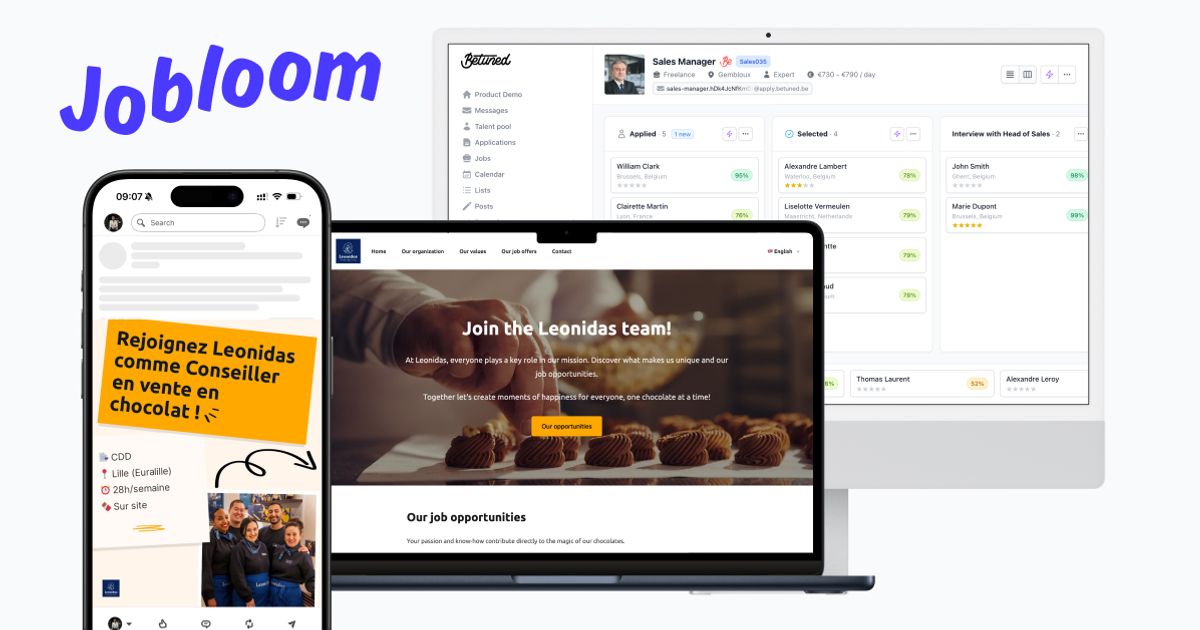
You don’t need an ATS… ...until the moment Excel shows its limits. At first, the spreadsheet is an obvious ally: a few rows, three columns, and your application tracking is set up. It’s fast, free, and flexible. Exactly what you expect from it. But in recruitment, one reality is gradually asserting itself: a simple setup works very well as long as the volume of applications remains manageable . Then your needs evolve. More applications, several positions to recruit for at the same time, and sooner or later colleagues joining your team. Tracking becomes a bit less smooth, information gets scattered across different tools, and some tasks take longer than they used to. Nothing critical, but a clear signal: the tool is reaching its limits. From that point on, the question is no longer really whether Excel works. It’s whether it’s still suited to your needs. The “too many spreadsheets” syndrome: a misleading illusion of robustness Excel is inevitably only a temporary solution for managing your recruitment. Microsoft Excel was originally designed to handle numerical data and organize information in table form. Its main role is: do calculations (budgets, forecasts, financial analyses) organize data (lists, inventories, simple databases) quickly analyze (sorting, filters, pivot tables) model scenarios (simulations, projections) In other words, Excel is a tool for processing and analyzing data, not an ideal tool for managing a workflow or complex processes. Excel does its job perfectly if: Your number of applications remains negligible (1 or 2 positions per year). Each job posting receives fewer than 20 applications. You are the only one in charge of updating the file. The breaking point comes as soon as you start to scale. Multiply the open positions and add a manager into the loop, and chaos isn’t far off! The limits of Excel in recruitment The problem with Excel doesn’t come from what it does, but from what it doesn’t let you do. Behind its simplicity, certain limitations appear as soon as the volume increases: Limited visibility: It’s hard to have a clear, real-time view of recruitment progress. Tracking does exist, but it takes time and remains hard to read. Clarity is quickly lost. A not-so-smooth collaboration: Between the different file versions, the conversations on Slack, and the emails, information is scattered. This makes teamwork more complicated and increases the risk of errors. Limited use of applications: Profiles are stored but rarely reused effectively. Without structure or long-term tracking, a strong candidate can quickly be forgotten. Time-consuming manual tasks: Sorting resumes, following up, updating records… these actions take time and rely entirely on people, with a risk of things being forgotten. An impact on the candidate experience: In poorly structured processes, a significant number of candidates do not receive any response. This can damage the company’s image. Taken individually, these points may seem minor. But taken together, they slow down recruitment and reduce its quality. In an unstructured process, up to 60% of candidates never receive a response. It’s your employer brand that pays the highest price. The hidden cost of “free” Saying that Excel costs nothing is an accounting error. In reality, you pay for your recruitment process in “brainpower” or in “headaches” — it’s up to you! An invisible administrative burden - In SMEs, a recruiter spends on average 30 to 40% of their time on low value-added tasks: copying and pasting information, following up manually, renaming and filing resumes. Time that is necessary, but that comes at the expense of analysis and candidate relationships. A recurring sourcing cost - Because there’s no structured database (talent pool), every recruitment process starts from scratch. Posting job ads on LinkedIn often costs between €300 and €1,500 per listing , for candidates you may already have identified in the past. The wake-up call: when should you switch to an ATS? Switching to an ATS shouldn’t be a rushed, last-minute reaction, but a natural next step in the evolution of your organization. There are some unmistakable signs: You spend more time updating your spreadsheet than talking to candidates. A manager asks you, “what’s the status of my recruitment?” and you have to go look for the information. A good candidate slips away from you simply because of a lack of follow-up. You no longer know exactly how many candidates are currently in the recruitment process. You recruit regularly, but without any real method or structured follow-up. Taken individually, these signals may seem harmless. But taken together, they point to one simple thing: your organization is reaching its limits. At this point, the question is no longer whether you should structure your hiring, but when you decide to do it. Switching to an ATS: structuring the recruitment process An ATS like Jobloom lets you move from manual tracking to a structured, traceable, and manageable process . Data centralization - All applications, communications, and documents are consolidated in a single database. Each candidate has a complete history, accessible in real time by the teams. Pipeline tracking - Applications are organized by stages (screening, interview, approval, etc.). The pipeline provides a clear view of progress and makes it easier to manage recruitment. Automation of actions - Sending emails, follow-ups, and acknowledgements of receipt: repetitive tasks are automated. This reduces oversights and ensures consistent communication. Connection with the career site - The job postings published on your career site are synchronized in real time with the ATS . Any changes are automatically updated, applications flow directly into the system with no re-entry or breaks in the process. This ensures reliable information and a smooth candidate experience. Talent pool utilization - Profiles are indexed, searchable, and can be reactivated. The candidate database becomes an internal sourcing lever , available at any time. Structured collaboration - Managers and recruiters work in the same tool, with shared comments, evaluations, and tracking. Information is consolidated and no longer depends on scattered exchanges. An ATS helps secure the process, improve visibility, and optimize the time spent on recruitment. Conclusion: Excel is a starting point, not a future-proof solution Excel works until it starts slowing down your hiring. At first, it provides structure. Then, gradually, it scatters, wastes time, and lets opportunities slip by. This shift is rarely visible, but its effects are very real. The issue isn’t choosing between two tools. It’s deciding when you want to move from a handcrafted, ad‑hoc process to a controlled, well‑managed recruitment approach. “I have Excel, I don’t need an ATS.” Really? Here’s how it changes your day-to-day work. Excel Candidates scattered across 10 files Manual posting, offer by offer No automatic tracking of applications Copy-paste, duplicates, errors No careers site Team collaboration impossible GDPR: data everywhere, real risk Jobloom All candidates centralized, in one single place Multi-posting to LinkedIn, Indeed & co in 1 click Visual pipeline, 100% automatic tracking AI-powered sorting and matching Career site created for you The whole team collaborates in real time GDPR by design, data secured “Excel manages rows. Jobloom manages your recruitment.” Amélie Ready to attract the right candidates? Simplify your hiring with Jobloom.